
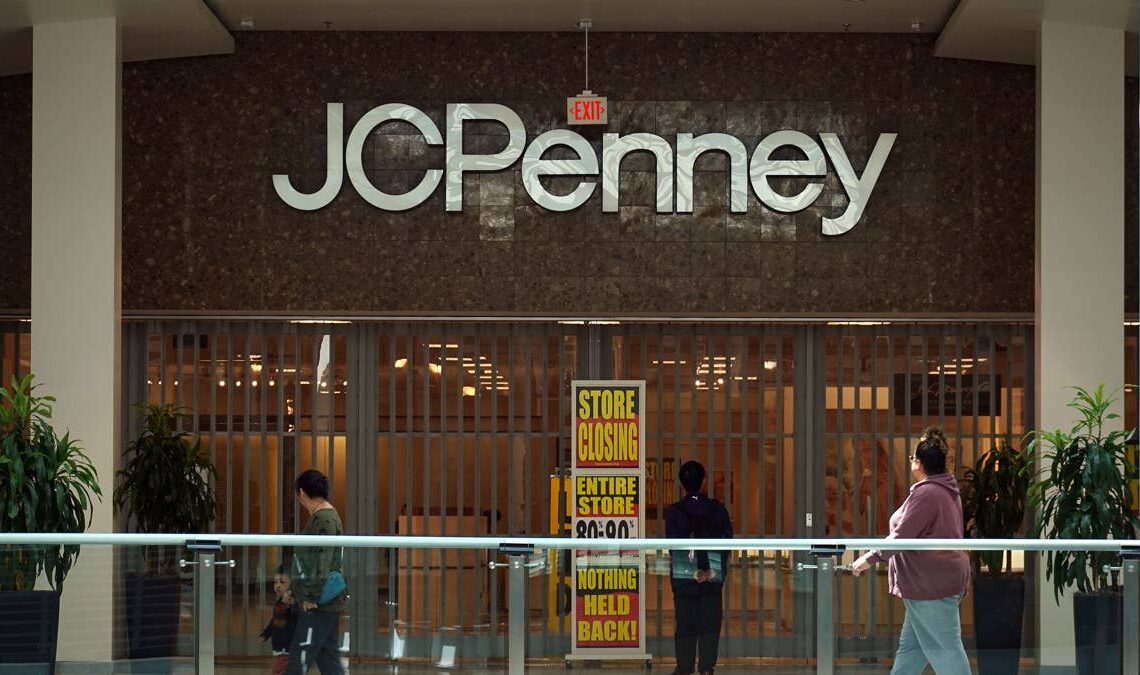
Mall staples continue to disappear as rising competition, weaker consumer spending, and the growth of e-commerce reshape the retail landscape.
Macy’s plans to shutter around 150 underperforming stores by 2026, Claire’s closed nearly 300 U.S. stores after filing for Chapter 11 bankruptcy in 2025, and Forever 21 permanently closed all U.S. locations following its Chapter 11 bankruptcy that same year.
JCPenney, the former department store leader founded in 1902, has endured years of bankruptcy, widespread store closures, and restructuring. Now, as the retailer continues its recovery, many of its stores could receive a second chance at long-term stability through a major real estate transaction.
JCPenney could soon sell 117 stores
Onyx Partners is once again seeking to acquire several JCPenney store properties across 35 states, following a similar deal that collapsed in late 2025.
This time, the private equity firm is offering $934 million for 117 properties, averaging roughly $8 million per store. Most terms of the proposal closely mirror the previous agreement.
In its letter of intent, Onyx Partners said it has sufficient capital to complete the acquisition and is prepared to close the transaction on September 25. As of the date of publication, Copper Property CTL Pass-Through Trust has not publicly responded to the proposal.
Copper Property was created during JCPenney’s Chapter 11 bankruptcy to own and eventually sell many of the retailer’s real estate assets after they were separated from the operating business.
If the sale proceeds, ownership of the buildings would change hands, but JCPenney’s day-to-day operations would remain unaffected because all 117 stores are protected by long-term leases.
“Any potential transaction is merely a transfer of ownership of the physical stores and would not change the nature of our long-term leases on these locations,” said a Catalyst Brands spokesperson, CoStar reported.
Earlier in 2025, JCPenney and SPARC Group merged to create Catalyst Brands, the company that now operates JCPenney stores.
Previous JCPenney store deal with Onyx Partners failed
In July 2025, JCPenney entered into a $947 million all-cash agreement with Onyx Partners to transfer ownership of 119 properties. The transaction was structured through Copper Property CTL Pass-Through Trust.
Copper Property disclosed that the amendment to the agreement became effective on July 23, 2025, and was non-refundable, effectively guaranteeing the transaction if all closing conditions were met, according to the trust’s press release. Once completed, the trust planned to distribute the proceeds to investors.
Under the terms of the deal, the stores were subject to a triple-net master lease, meaning JCPenney remained responsible for operating expenses, including property taxes, insurance, and maintenance. The lease also included limited termination rights for individual stores under specific circumstances, such as property damage or condemnation.
Despite those protections, Copper Property cautioned that the sale remained subject to several closing conditions and could not be guaranteed. Throughout the process, all 119 stores continued to operate normally.
The transaction was initially expected to close on September 8, 2025, with the trust required to dispose of the properties by January 2026. However, repeated delays ultimately derailed the agreement.
Months later, Copper Property revealed that the nearly $1 billion transaction had failed to close. In a Form 8-K filing on December 22, 2025, the trust issued a notice informing Onyx Partners that the agreement would be terminated if the buyer did not complete the purchase by December 26.
Justin Sullivan/Getty Images
JCPenney’s Chapter 11 bankruptcy
JCPenney filed for Chapter 11 bankruptcy protection in May 2020. While the company cited the COVID-19 pandemic as a major factor, it had struggled to generate consistent profits for nearly a decade before seeking court protection.
As part of its restructuring, JCPenney secured $450 million in debtor-in-possession financing to continue operating while reorganizing its business.
The retailer was ultimately acquired by Simon Property Group (SPG) and Brookfield Asset Management (BAM) for $1.75 billion, transferring ownership of its retail operations while separating many of its real estate assets.
Copper Property was created during the restructuring to assume ownership of 160 retail properties and six warehouses. Managed by an affiliate of Hilco Real Estate, the trust was tasked with owning, leasing, and ultimately selling those assets.
Newmark, the commercial real estate firm representing Copper Property, previously marketed 121 JCPenney store properties across 35 states. In early 2025, two of those properties, one in Florida and one in Pennsylvania, were sold to Simon Property Group and Brookfield Asset Management.
What went wrong with JCPenney
Analysts have attributed JCPenney’s decline to a combination of missteps, shifting consumer preferences, and intensifying competition.
One of the retailer’s most significant turning points came in 2011 when then-CEO Ron Johnson launched an ambitious rebranding effort. The company introduced a new logo, redesigned stores to create a more modern shopping experience, and replaced its long-standing coupon strategy with everyday low pricing.
The overhaul failed to resonate with JCPenney’s core customer base.
“For the JCPenney shopper, the brand experience wasn’t just about the final price paid,” wrote Marketing Expert Roy Harmon on LinkedIn. “It was about the psychological thrill of the hunt. Customers loved the sense of ‘winning’ by stacking coupons and catching a great sale. By removing the discounts, Johnson removed a key source of perceived value and delight. Customers, confused and alienated by the new approach, fled in droves.”
Here’s some of my previous coverage of retail store closures and deals:
- 79-year-old fast-fashion retailer closes 128 stores
- 88-year-old retailer closing 75 stores, slows expansion
- 86-year-old furniture chain closes stores after decades in business
As foot traffic declined and rivals continued gaining market share, JCPenney’s debt burden grew even heavier.
“The company survived the Great Depression, World Wars and the financial crisis, but just couldn’t contend with the confluence of aggressive competitors, such as Walmart, Target, online juggernaut Amazon and the forced closures of nonessential business in the wake of the coronavirus,” said former Forbes contributor and founder and CEO Jack Kelly.
“COVID-19 was the straw that broke the company’s back after 118 years in business.”
Related: Sportswear giant continues store closures nationwide